
Indoor & Backyard Scavenger Hunt Kit
Clue cards, photo challenges and a tally sheet for hunts that work in a living room or a backyard.
- Players
- 2–20 players
- Ages
- Ages 5+
- Play time
- 30–60 min
- Prep
- 20 min prep
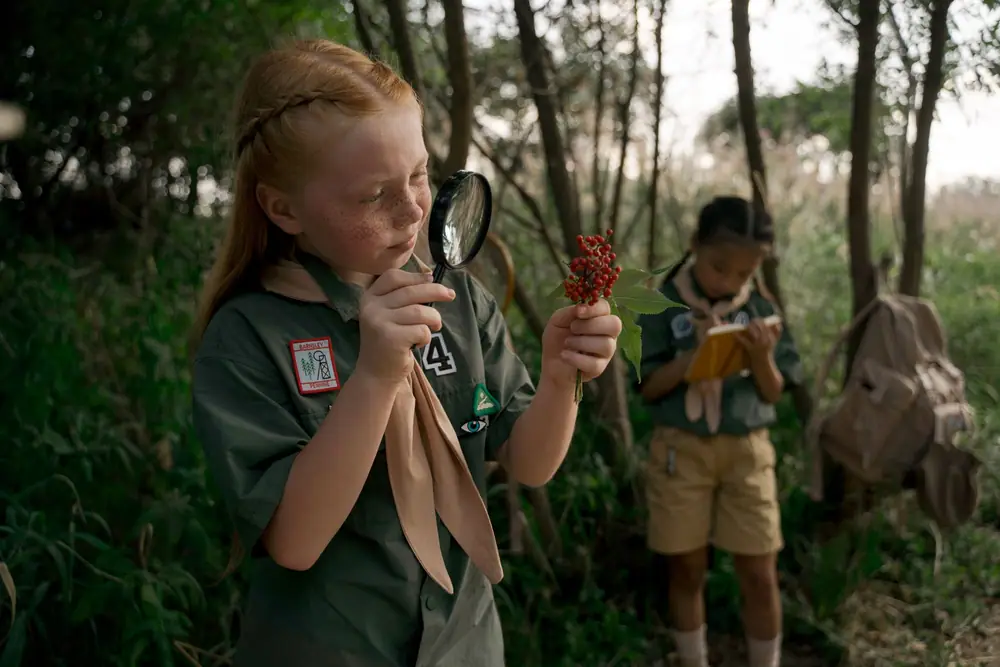
A scavenger hunt is the rare party game that gets everyone off the sofa, mixes ages without effort and needs almost nothing you do not already own. This kit turns the idea into something you can run in twenty minutes of prep: clue cards sorted by setting, a photo-challenge card for older players, a team tally sheet and a short answer key that keeps the host from forgetting where the last clue went.
What is in the kit
Everything below is shown as a card preview further down the page. Print the page, cut along the dashed lines and you are ready to hide clues.
- Indoor list card — ten everyday objects that exist in almost every home, from a spoon to something with a zipper.
- Backyard list card — nature finds such as three different leaf shapes, a smooth stone and something that smells nice.
- Riddle clue cards — short rhyming hints for a chained hunt where each clue leads to the next hiding spot.
- Photo challenge card — for teens and adults with a phone: recreate a famous painting, find a shadow shaped like a letter.
- Team tally sheet — points per item, bonus points and a tiebreaker line.
- Host key — a single card listing every hiding spot in order so nothing stays lost in the laundry basket for a month.
Setup checklist
Before guests arrive
- Decide on the format: list hunt (find items) or chained hunt (follow clues)
- Walk the space and mark rooms or areas that are off-limits
- Print the cards and cut them out; write hiding spots on the host key
- Hide chained clues in reverse order, starting with the finish line
- Put a small bag or basket and a pencil in each team pack
At kickoff
- Split into teams of two to four, pairing younger kids with an older helper
- Read the boundaries out loud and point to the off-limits doors
- Set a visible timer (a kitchen timer works well)
- Agree on the return signal, such as a whistle or a shout of the team name
How to play
- Hand out team packs
Each team gets the same list card, a tally sheet and a bag. For chained hunts, give each team only the first clue.
- Start the clock
Most indoor hunts land well at 20 to 25 minutes; backyard hunts can run 30 to 40.
- Find, collect or photograph
Teams collect objects they may move and photograph anything that should stay put, like a birdbath or a painting.
- Return on the signal
When the timer goes off every team heads back to base, even if they are one item away.
- Score together
Go through the list out loud. Each item is one point, bonus items are two, and the group decides on borderline finds.
- Celebrate and reset
Hand out a small prize or first pick of dessert, then have everyone return borrowed objects before the next game.
Printable card previews
Find these 10 things
- A spoon
- Something with a zipper
- A red sock
- A book with a dog in it
- Something that ticks or beeps
Nature finds
- Three leaf shapes
- A smooth stone
- Something that smells nice
- A feather (look, don't pick)
- A Y-shaped twig
Clue #1
I keep things cold but never shiver. Look on my door, near the butter.
Snap it
- Recreate a famous painting
- A shadow shaped like a letter
- Your whole team in one mirror
Team: ________
Items found: ____
Bonus items: ____ × 2
Photos: ____ × 2
Total: ____
Hiding spots
1. Fridge door
2. Under the doormat
3. Inside a rain boot
4. Behind the clock
5. Finish: dessert table
Use the Print this kit button: the page switches to a light, ink-saving layout with dashed cut lines around every card. Card stock (or regular paper glued to a cereal box) holds up best for repeat games.
Variations
| Variation | Best for | What changes |
|---|---|---|
| Color hunt | Ages 3–6 | Each team gets one color and finds five things in it. No reading needed. |
| Alphabet hunt | Ages 7–12 | Find one item for as many letters as possible in 15 minutes. |
| Chained riddle hunt | Mixed families | Six to eight rhyming clues lead to a final treat. Works well for birthdays. |
| Photo-only hunt | Teens and adults | Nothing is moved; teams show photos at the end, and style points are allowed. |
| Glow hunt | After dark in a yard | Hide glow sticks or reflective tape; give each team a flashlight and a clear boundary. |
Host notes
Keep the first round short. A hunt that ends while people still want more is far better than one that drags until someone gives up. If you have a wide age range, give younger teams a picture version of the list: a quick doodle next to each word is enough.
For outdoor hunts, walk the boundary with everyone before you start and name a grown-up who stays at base. Skip anything that involves picking plants or disturbing birds and insects; the photo rule handles those finds nicely. When the game ends, let the winning team hide the clues for round two. Kids love being the ones who know the answers, and it gives the host a well-earned break.
Deal another kit

Trivia Night Kit
Round planner, question cards and answer sheets to run a pub-style quiz at your kitchen table.
Party Bingo Kit
Classic number bingo, a mingling people-bingo grid and theme cards for movie or holiday parties.

Charades Card Deck
Easy-to-tricky word cards, the classic gestures and a team scoring sheet for living-room charades.