
How to Choose Party Games by Group Size and Age
A clear matrix for matching games to three, six, twelve or twenty-five guests, with notes on mixed ages.
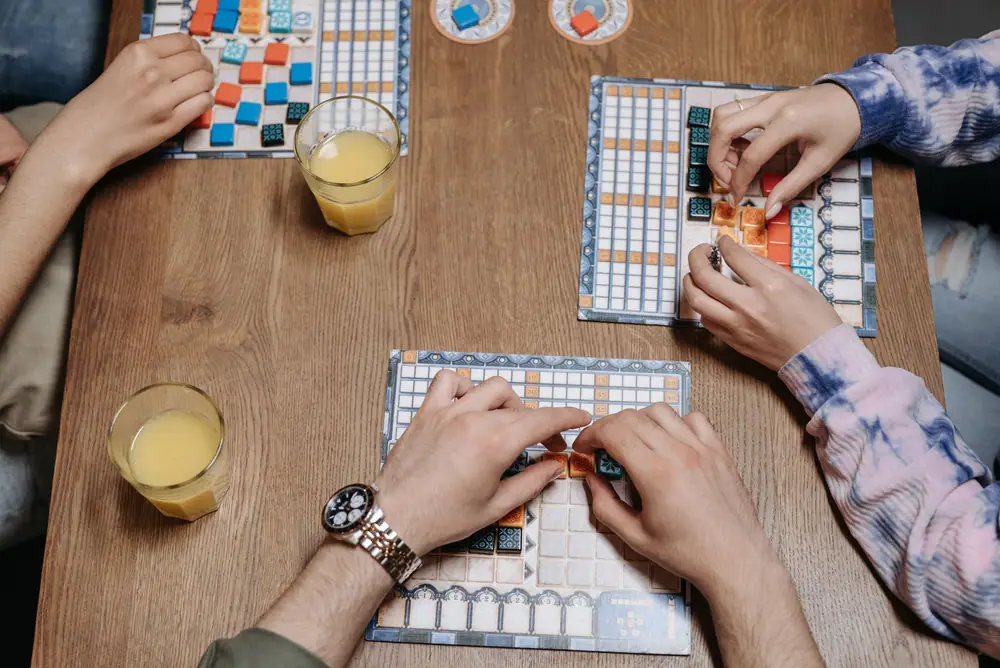
The same game can be the highlight of one evening and a slog the next. Usually the game has not changed; the group has. Five players might love a round of trivia that feels thin with three, and a drawing game that sings with eight becomes a long wait with fifteen. Matching the game to the size and age mix of your group is the single most useful decision a host makes.
Why group size is key
Every game has a sweet spot for downtime, the time a player spends waiting for their turn. In a turn-based game with six people, you might wait several minutes between turns. That is fine when watching others is entertaining, as in charades, but frustrating when it means staring at somebody else’s hand of cards.
Group size also changes how loud and fast a game feels. Small groups suit strategy and conversation. Large groups need simultaneous play, where everyone is doing something at once, or team formats where each person contributes to a shared answer.
Ask one question: what is everyone doing while they wait? If the answer is “nothing”, choose a different game.
The group-size matrix
| Group size | What works | What to avoid | Try from our kits |
|---|---|---|---|
| 2–4 | Card games, cooperative puzzles, word games | Team games that need at least two per side | Draw & Guess (pairs version) |
| 5–8 | Social deduction, draw-and-guess, small trivia | Long strategy games with heavy downtime | Charades |
| 9–15 | Team trivia, charades, two parallel tables | Any game where one person acts at a time for long | Trivia Night |
| 16–30 | Bingo, scavenger hunts, people bingo, quiz formats | Games that need everyone to see a small board | Party Bingo |
| 30+ | Hosted trivia, bingo with a caller, mingling games | Anything that needs individual rule explanations | Icebreaker Cards |
Splitting into tables
Once you have more than eight or nine people, consider running two tables with different games and swapping players at the snack break. One table can host something lively and loud, the other something calmer. People sort themselves by mood, and the host is no longer responsible for keeping one enormous group engaged.
Adjusting for age
Age changes what counts as fun, but it changes the mechanics more than the spirit. Young children need short turns and clear visuals. Teens want to feel they are not playing a “kids’ game”. Grandparents may prefer games that do not depend on fast reactions or tiny print.
Ages 4–7
- Picture bingo and color hunts
- Animal charades with sounds allowed
- Turns under one minute
Ages 8–12
- Scavenger hunts with riddle clues
- Draw-and-guess with medium prompts
- Team trivia with a kid-friendly round
Teens
- Photo scavenger hunts
- Speed charades
- Telephone drawing
Mixed generations
- Classic bingo with large print
- Team trivia with one question round per age group
- Pairs charades: one adult, one child
Reading the room
Size and age get you close, but energy is the final filter. After a big dinner, a slow word game might be perfect. At a birthday party where the room is already buzzing, a quiet strategy game will struggle. Watch for signs: if people keep drifting to their phones, the game is too slow; if they are talking over the rules, the group wants something looser.
Quick picks
- Small dinner party of six adults: icebreaker cards over dessert, then a draw-and-guess round.
- Family gathering of twelve with kids: a backyard scavenger hunt, then classic bingo while the food settles.
- Office social of twenty-five: people bingo as guests arrive, then a four-round trivia quiz in teams.
- Teen birthday of ten: photo scavenger hunt, then speed charades.
Whatever you pick, keep the first game short and simple. A quick win in the first twenty minutes buys you the patience of the room for anything more ambitious later on.
It also helps to have a backup for each slot. If the group turns out larger than expected, a team format is easy to switch to; if it is smaller, a pairs version of the same game keeps things moving. Printables make this painless, because you can print a few extra cards in minutes rather than buying another boxed game.
Keep reading

The Game Night Planning Checklist: From Invite to Clean-Up
Everything a relaxed host sorts out a week ahead, the day before and the hour before guests arrive.
Read the guide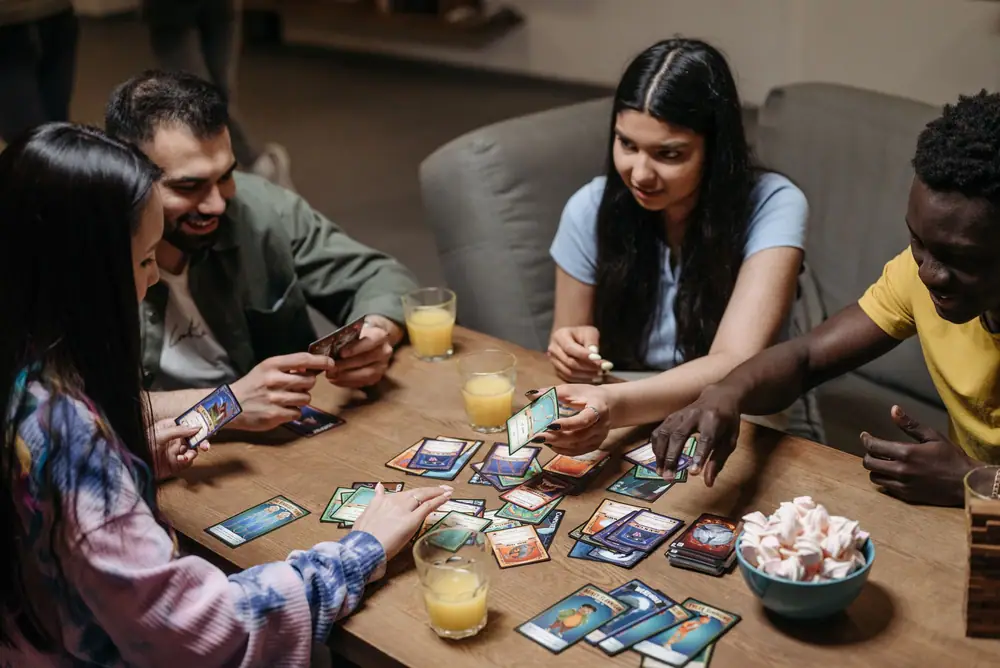
Hosting Tips for a Relaxed, Inclusive Game Night
How to teach rules in two minutes, include quieter guests and keep competitive players cheerful.
Read the guide
Game Night Snacks and Table Setup That Keep Cards Clean
One-hand snacks, a separate snack station and a table layout that keeps printables crumb-free.
Read the guidePick a kit, press print, deal the fun.
Six printable game kits, each with rules, setup and ready-to-cut cards.