
Hosting Tips for a Relaxed, Inclusive Game Night
How to teach rules in two minutes, include quieter guests and keep competitive players cheerful.
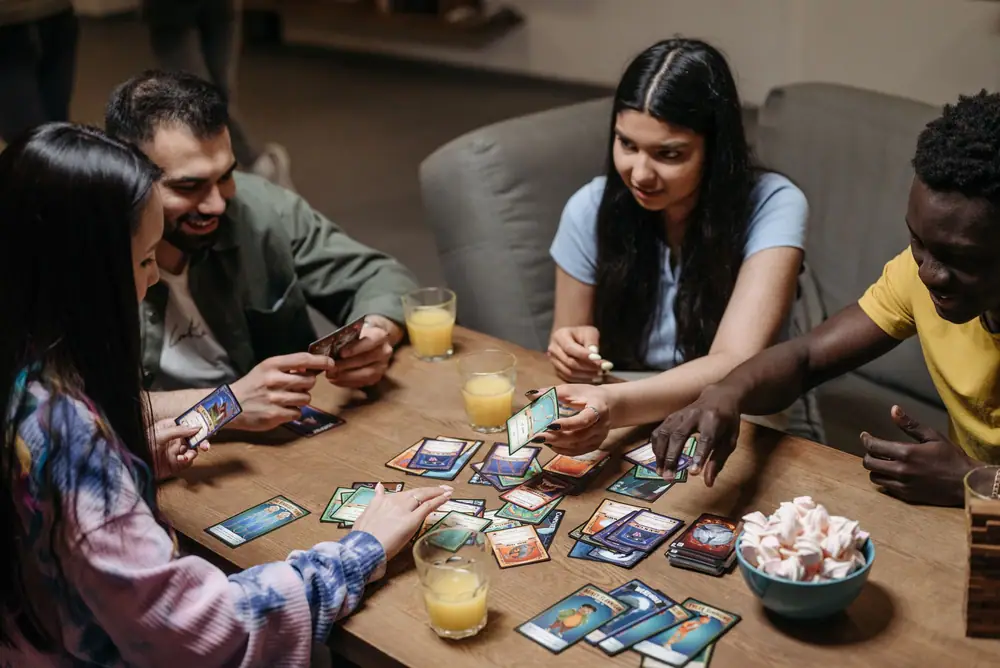
A great game night host is not the person who knows the most games. It is the person who makes everyone else feel comfortable enough to be silly, to lose cheerfully and to try a game they have never heard of. These are the habits that make that happen.
Teach rules in two minutes
Long rule explanations are the most common reason a game night loses momentum. Before guests arrive, read the rules once and reduce them to three sentences: how you win, what you do on your turn, and one thing people usually get wrong.
| Step | What to say | Example (charades) |
|---|---|---|
| 1. Goal | How you win | “Your team scores points by guessing what your actor mimes.” |
| 2. Turn | What you do when it is your go | “Pick a card, act it out in sixty seconds, no talking.” |
| 3. Gotcha | The rule people miss | “Only your own team can guess.” |
| 4. Start | Play a practice round | “I’ll go first so you can see it.” |
Then start playing. Answer the remaining questions as they come up. People learn a game far faster by playing one round than by listening to every edge case.
Rules are learned in the first round, not in the explanation.
Include everyone
Every group has guests who are quieter, newer or less confident with games. A few small choices make a big difference to how included they feel.
- Choose team games early. Team formats let people contribute without being in the spotlight.
- Offer roles. Timekeeper, scorekeeper and bingo caller are real jobs that keep people involved.
- Seat thoughtfully. Put newer guests next to someone warm and patient, not next to the most competitive player.
- Check accessibility. Large-print cards, good lighting and seating that suits everyone count for more than any game choice.
- Make sitting out normal. Someone who prefers to watch a round with a cup of tea is still part of the evening.
Handling competitive players
A bit of competition gives games their spark. Too much, and it tips into tension. The trick is to channel it rather than squash it.
Mix up formats so no one player dominates every game. Someone brilliant at trivia may be hopeless at drawing, and that is exactly what makes the evening feel fair. Cooperative games, where everyone wins or loses together, are also a useful reset after an intense round.
Pacing the evening
Energy in a room rises and falls in waves. Start with something short and lively, give the longest game the middle slot, take a proper snack break and end with a quick laugh. If you notice people glancing at phones or clocks, cut the current game short and move on without apology. Nobody remembers the game that ended early; everyone remembers the one that dragged.
When a game falls flat
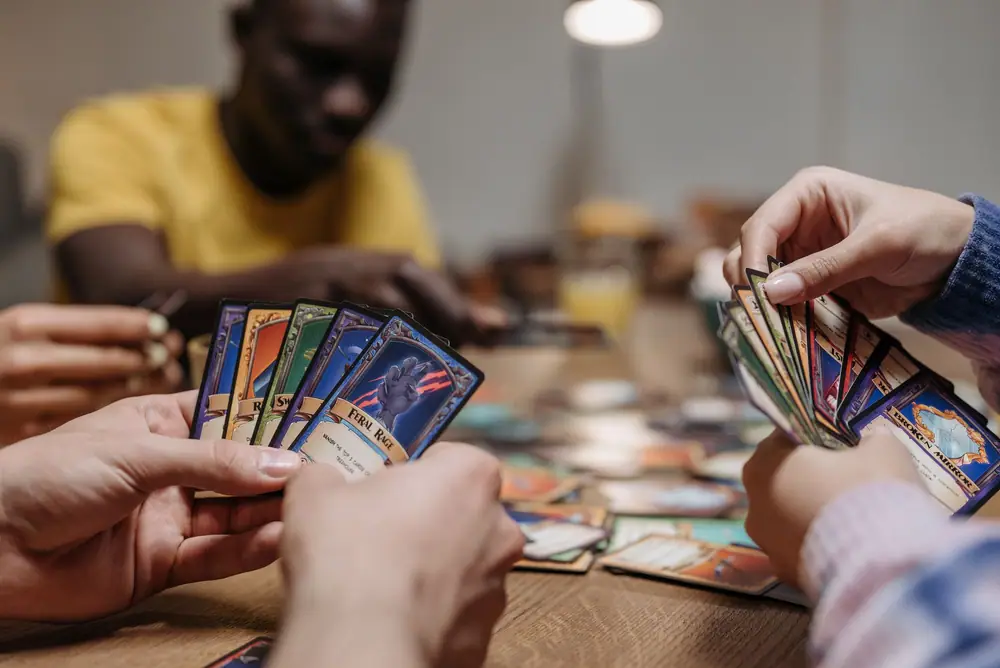
Every host eventually picks a game that simply does not land. The rules turn out to be confusing, the theme misses the room or a key player is tired. The graceful move is to call it early. Say something light — “this one is not our game tonight, let’s try something quicker” — and switch to a reliable favorite. Guests rarely mind a change of plan; what they mind is being stuck in a game nobody is enjoying. Keep a two-minute filler, like a single round of This-or-That or a sixty-second sketch challenge, ready for exactly these moments. Afterward, make a mental note of why it did not work so you can try it again with a different crowd.
Look after yourself
Hosts often spend the night in the kitchen and miss the fun. Prepare food that can sit out, ask a friend to handle drink refills and let games be explained by whoever knows them best. You invited people to play with you, so make sure you get a seat at the table.
At the end of the night, say a quick thank-you to anyone who helped and ask what game people would like next time. That small question makes guests feel part of the tradition and hands you your next plan for free.
Keep reading

The Game Night Planning Checklist: From Invite to Clean-Up
Everything a relaxed host sorts out a week ahead, the day before and the hour before guests arrive.
Read the guide
How to Choose Party Games by Group Size and Age
A clear matrix for matching games to three, six, twelve or twenty-five guests, with notes on mixed ages.
Read the guide
Game Night Snacks and Table Setup That Keep Cards Clean
One-hand snacks, a separate snack station and a table layout that keeps printables crumb-free.
Read the guidePick a kit, press print, deal the fun.
Six printable game kits, each with rules, setup and ready-to-cut cards.